Desk Lunch Questions Everyone Actually Has
Quick Answer: The three questions that matter most are food safety without a fridge (a cold pack keeps food under 40°F for four to five hours), the afternoon crash (driven by portion size and carbohydrate type more than by the food being lunch), and whether eating at your desk is worth the time saved (usually not, and the evidence on this is fairly clear).
Everything else follows from those three, so this is the whole thing as a set of questions and honest answers.
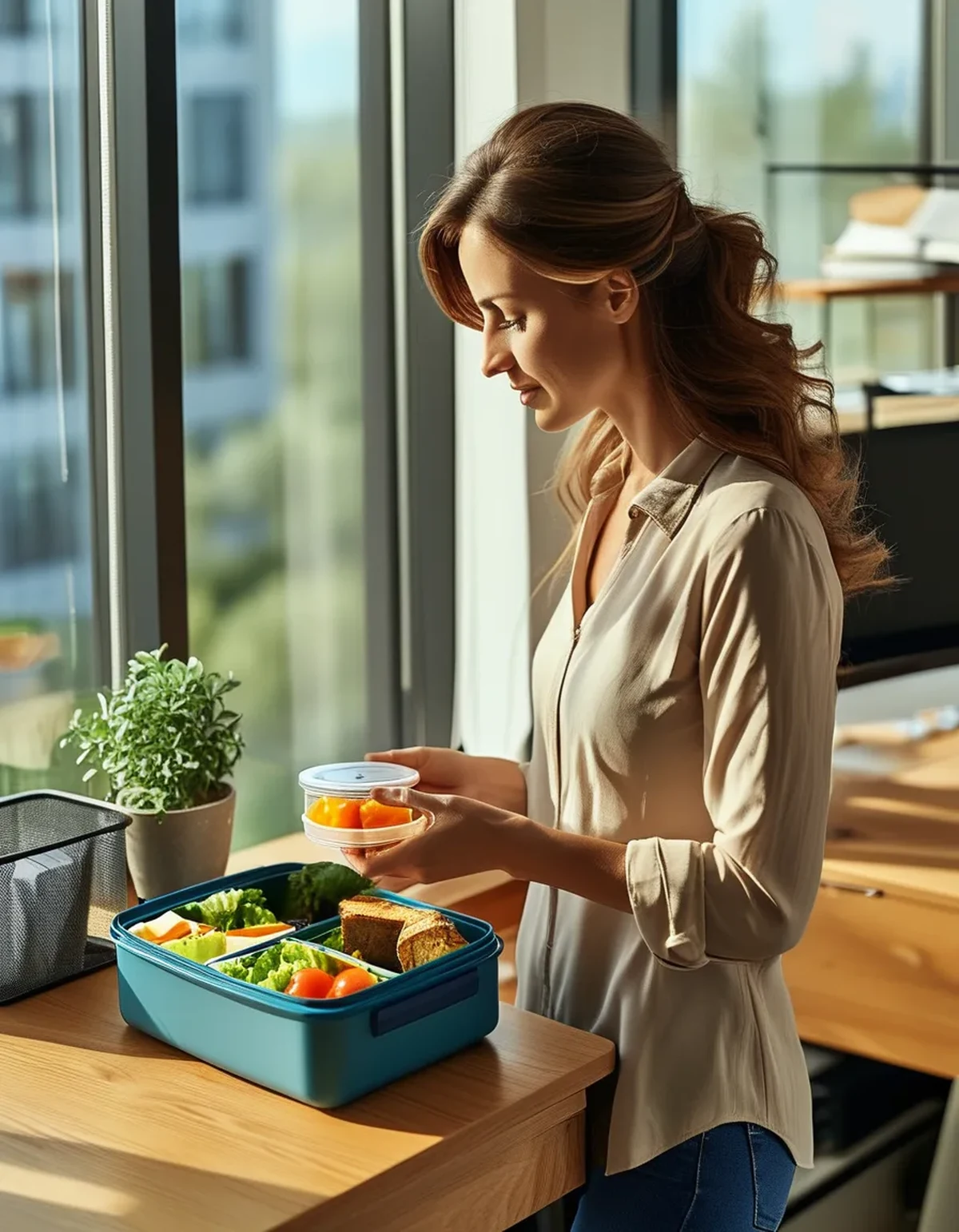
Is it safe to leave lunch out of the fridge all morning?
It depends on temperature and time, and the numbers are more specific than most people realise.
The danger zone is 40°F to 140°F. Perishable food should not spend more than two hours in it, or one hour above 90°F. A desk drawer in an air-conditioned office sits around 70°F, so a sandwich left there from 8am to 1pm has spent five hours in the danger zone.
One frozen gel pack in an insulated bag keeps contents below 40°F for four to five hours. Two packs, with the food between them, gets you comfortably through a full morning. This is the single highest-value item in a desk lunch setup and it costs almost nothing.
Some foods do not need it. Whole fruit, hard cheeses, cured meats, nut butters, bread, crackers, hummus in a sealed shelf-stable pack, and anything you bought shelf-stable. A lunch built entirely from these needs no cooling at all.
The ones that genuinely do: cooked rice and pasta, cooked chicken, egg, dairy-based dressings, cut melon, and anything with mayonnaise. Cooked rice in particular is worth taking seriously — it carries a spore-forming bacterium that survives cooking and multiplies at room temperature.
Why do I crash at 2pm after eating?
Three contributors, and portion size is the biggest.
Portion size drives it most. A large meal triggers a bigger post-meal blood flow shift and a bigger insulin response. The same food in a smaller portion produces a markedly smaller dip. If you eat a large lunch and crash, halving it and adding a mid-afternoon snack usually fixes the crash entirely.
Carbohydrate type matters second. A lunch that is mostly refined carbohydrate — white bread, white rice, pastry — produces a faster rise and a sharper fall. Adding protein, fat, and fibre flattens the curve. Roughly 20-30g of protein at lunch is the practical target.
And some of it is not the food at all. The post-lunch dip is partly circadian — a genuine dip in alertness that occurs in the early afternoon whether or not you eat. People who skip lunch still get it. So some of what gets blamed on lunch is a rhythm you would experience anyway, and the food only makes it steeper or shallower.
What actually helps: a smaller lunch with real protein, a ten-minute walk afterwards, and daylight exposure. The walk is remarkably effective and almost nobody does it.
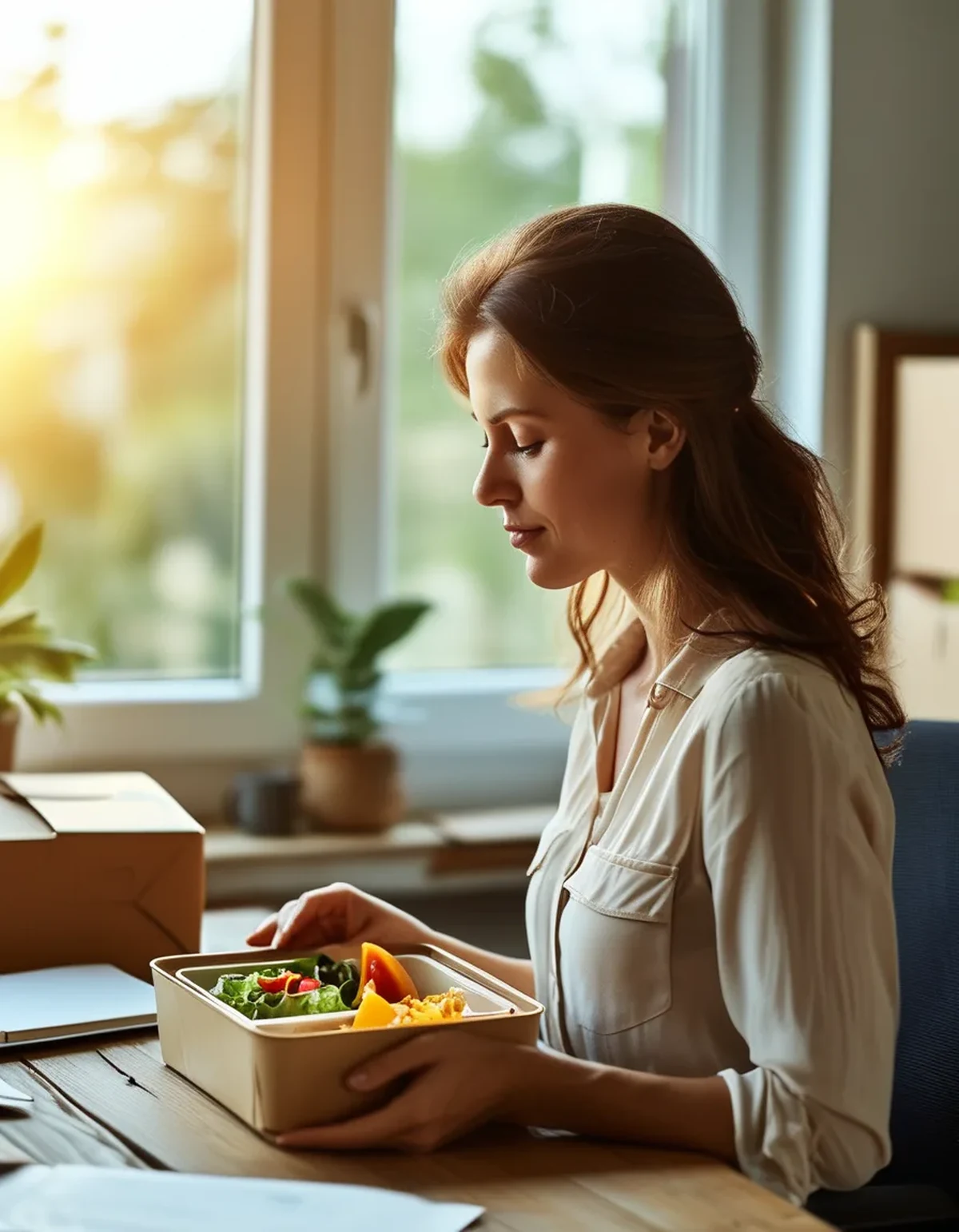
What can I actually make without a microwave or a fridge?
More than the sad-sandwich stereotype suggests, if you build around things that are supposed to be room temperature.
Grain salads — couscous, farro, or quinoa with roasted vegetables, herbs, and a vinaigrette. Designed to be eaten at room temperature, and better on day two.
Tinned fish and a shelf-stable base. Sardines or tuna with crackers, tomatoes, and olive oil. High protein, no cooling required for the tin until it is opened.
Frittata slices — need a cold pack, but they are excellent cold and hold up beautifully.
Soup in a pre-heated vacuum flask. Fill the flask with boiling water for five minutes, tip it out, then add soup at boiling point. It stays above 140°F for four to five hours, which is both safe and pleasant. This is the workaround for the no-microwave office and it is genuinely good.
Mezze plates — hummus, olives, cheese, flatbread, cucumber, dried fruit. Zero preparation, no reheating, and it feels considerably better than a container of leftovers.
Late summer specifically: this is peak tomato and stone fruit season, and a lunch built around a good tomato with olive oil and salt is a genuine seasonal advantage that disappears in six weeks.
Should I be eating at my desk at all?
Honestly, no, and this is the question with the clearest answer of the set.
The time saving is smaller than it feels. Desk lunches take longer than people estimate, because they are interleaved with work and stretched across an hour of half-attention rather than compressed into twenty focused minutes.
The recovery cost is real. Attention restoration research consistently finds that breaks involving a change of environment produce better afternoon performance than breaks taken in the same location. Eating while reading email is not a break in any measurable sense.
Hunger cues are dulled by distraction. Eating while working reliably produces both eating more at the time and being hungrier later — this shows up consistently in studies of distracted eating.
The practical compromise most people can actually manage: eat at the desk if you must, but take ten minutes afterwards away from it. Outside if the weather allows, which through late August and September it usually does. The ten minutes buys most of the benefit of a full lunch break.
And the hygiene point, which nobody enjoys but which is worth one line: desks carry considerably more bacteria than most people assume, and keyboards are rarely cleaned. Wipe the surface before eating on it.
FAQ: More Desk Lunch Questions
How long do leftovers keep before they become lunch material?
Cooked leftovers are good for three to four days refrigerated. Rice is the exception worth being conservative about — one day is the sensible limit, and cool it fast rather than leaving it on the counter.
Is it worth buying a heated lunchbox?
If your office has no microwave and you want hot food, yes — they work. A pre-heated vacuum flask does most of the same job for a fraction of the price and needs no power, so try that first.
What is the best thing to keep in a desk drawer permanently?
Nuts, an olive oil tin of fish, oatcakes, and instant miso. That combination covers the day you forgot lunch entirely and stops the 1pm vending machine decision, which is the single most consequential lunch decision most people make.
TL;DR:
- One or two frozen gel packs in an insulated bag keeps food below 40°F for four to five hours — the highest-value item in the whole setup.
- Cooked rice, egg, chicken, and dairy dressings need cooling; fruit, hard cheese, nut butters, and shelf-stable packs do not.
- The 2pm crash is driven by portion size first, refined carbohydrate second, and partly by a circadian dip you would get anyway.
- A pre-heated vacuum flask holds soup above 140°F for four to five hours and solves the no-microwave office.
- Eating at the desk saves less time than it feels like — take ten minutes away from it afterwards even if you ate there.
Build the drawer stash before you build the meal plan. The forgotten-lunch day is the one that actually determines how well the whole system works.
Keep Reading
This article is for general informational purposes only and is not medical advice. Always consult a qualified health professional for guidance specific to you.