Does Eating Lunch While Staring at a Screen Actually Affect Digestion?
Quick Answer: Yes — eating while distracted by a screen measurably reduces how well the brain registers fullness cues, since digestion and satiety signaling rely partly on paying attention to the meal itself, and screen-distracted eating is consistently linked in research to eating faster, eating more before feeling full, and remembering the meal less afterward, which can contribute to feeling hungry again sooner.
It’s not that the screen directly disrupts stomach digestion mechanically, it’s that distraction disrupts the attention-based signals your brain uses to register when a meal is actually satisfying.

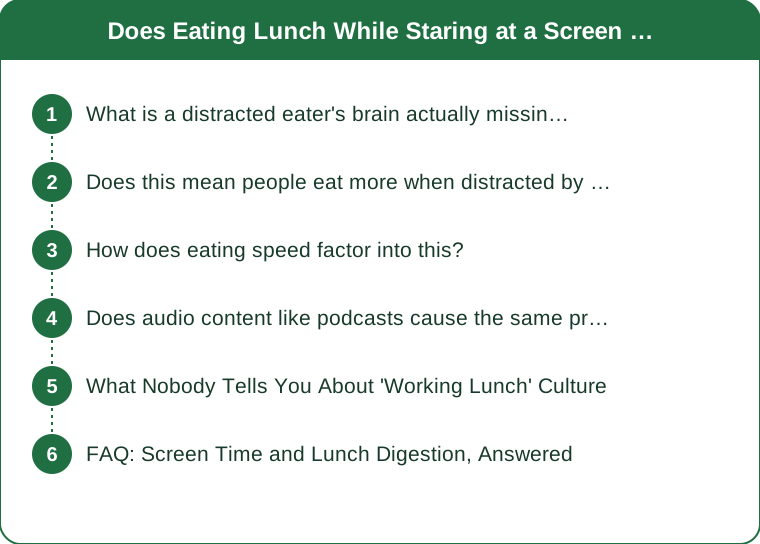
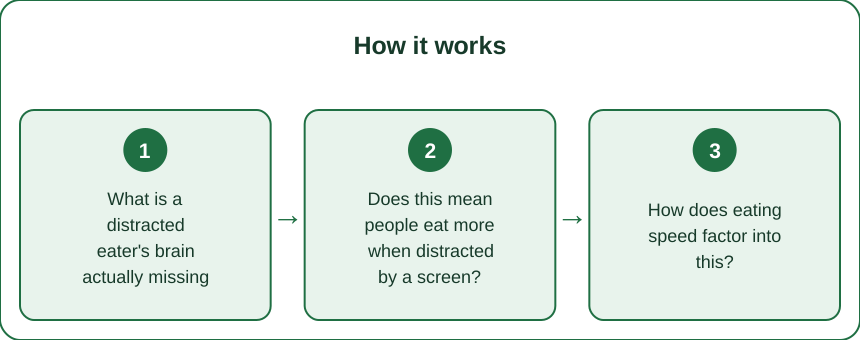
What is a distracted eater’s brain actually missing during a screen lunch?
Satiety (feeling full and satisfied) depends partly on sensory attention to a meal — noticing taste, texture, and the visual experience of the food decreasing on the plate — and screen distraction pulls attention away from those cues, so the brain registers less of the meal even though the same amount of food was eaten.
Does this mean people eat more when distracted by a screen?
Often yes — multiple studies on distracted eating show people eating more calories in a single sitting when distracted, and importantly also eating more later in the day, since the reduced memory of the meal contributes to feeling less satisfied by it afterward.
How does eating speed factor into this?
Screen-distracted eating tends to happen faster and with less chewing awareness, and eating quickly outpaces the roughly 20-minute delay it takes for fullness hormones to signal to the brain, meaning a distracted, fast lunch can end before the fullness signal has even caught up.

Does audio content like podcasts cause the same problem as a visual screen?
Audio content tends to be less disruptive to eating awareness than a visual screen, since it doesn’t compete for visual attention with the food itself, though very engaging or attention-demanding audio can still pull some focus away from the meal. Eating with coworkers and conversation tends to slow eating pace somewhat too, adding a different kind of engagement that isn’t identical to fully mindful eating but isn’t the same passive distraction a screen creates either.
What Nobody Tells You About ‘Working Lunch’ Culture
Nobody tells you that the productivity gained from eating lunch at your desk while working is often offset by eating more overall and feeling less satisfied by meals throughout the day, which can show up as afternoon snacking or overeating at dinner — the perceived time savings doesn’t always translate into an actual net gain once those downstream effects are counted.
FAQ: Screen Time and Lunch Digestion, Answered
Is there a simple way to reduce screen-distracted eating without giving up the desk lunch entirely?
Even just closing email and putting the phone face-down for the actual eating portion of the break, without fully leaving the desk, meaningfully increases attention to the meal.
Does this distraction effect apply the same way to breakfast and dinner?
Yes, the same attention-based satiety mechanism applies at any meal, though lunch is the one most commonly eaten at a screen given typical work schedules.
How long of a screen-free eating window actually makes a difference?
Even 10-15 minutes of focused, screen-free eating at the start of a meal has been shown to improve satiety awareness compared to a fully screen-distracted meal.
TL;DR:
- Screen-distracted eating reduces how well the brain registers fullness and satisfaction from a meal
- Distracted eaters tend to eat faster and more before the fullness signal catches up
- This can lead to feeling hungry again sooner and eating more later in the day
- Even a partial screen-free window during lunch meaningfully improves satiety awareness
The screen doesn’t disrupt digestion mechanically, but it disrupts the attention your brain needs to register a meal as actually satisfying — a few screen-free minutes at lunch goes further than it might seem.
Keep Reading
This article is for general informational purposes only and is not medical advice. Always consult a qualified health professional for guidance specific to you.