How to Keep Your Desk Lunch at a Safe Temperature All Morning (Without a Fridge)
Quick Answer: Perishable food (meat, dairy, cooked grains) shouldn’t sit above 40°F for more than about two hours, so if your commute plus morning at your desk adds up to more than that, a proper insulated bag with two ice packs (not one) is the difference between a safe lunch and a genuine food safety risk — not just a taste preference.
Most people think about desk lunch temperature as a texture issue, but it’s actually a food safety window that most packed lunches quietly blow past by mid-morning.

How long can a packed lunch actually sit out before it’s a real risk?
The USDA’s general guidance is that perishable food shouldn’t spend more than two hours in the 40-140°F ‘danger zone’ where bacteria multiply fastest — a lunch packed at 7am and eaten at 12:30pm is already past that window if it’s not actively kept cold, even if it still looks and smells fine.
Does one ice pack in a lunch bag actually keep food cold enough?
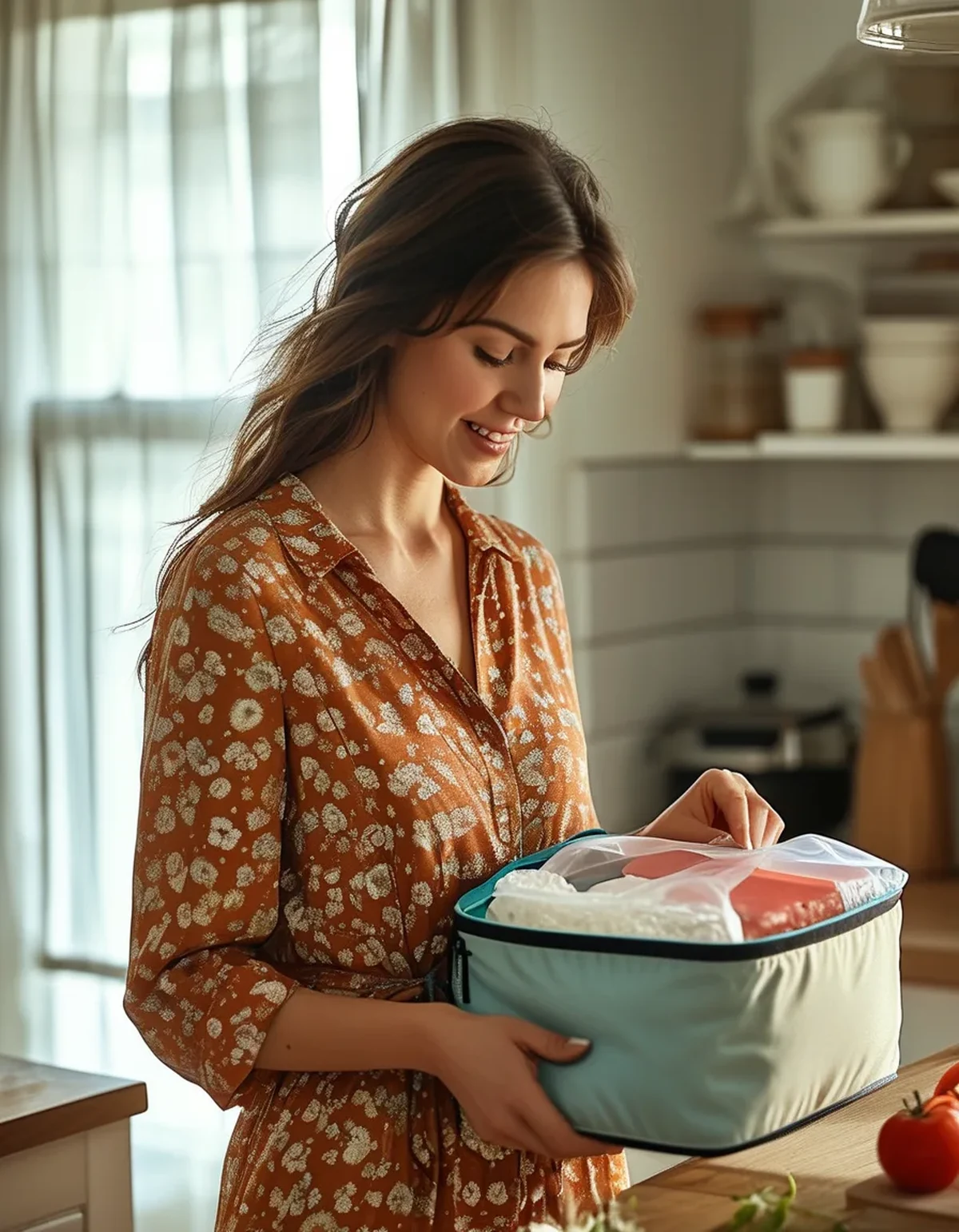
A single small ice pack often isn’t enough for a 5+ hour window — placing one ice pack above and one below the food (sandwiching it) keeps the whole container in the cold zone far more reliably than a single pack that only cools whatever it’s touching directly.
What foods hold up worst when temperature control slips?
Dairy-based dressings, mayonnaise-based salads, and cooked rice are the highest-risk items for room-temperature growth, while whole fruit, hard cheese, and shelf-stable items like nut butter sandwiches are far more forgiving if your bag warms up slightly before lunch.
Myth vs Fact: Desk Lunch Temperature
Myth: if the food still tastes fine, it’s still safe. Fact: bacterial growth that causes foodborne illness usually doesn’t change taste, smell, or appearance at all — you genuinely can’t tell by testing it.
Myth: a lunch bag alone (no ice pack) is enough insulation. Fact: an insulated bag slows temperature change but doesn’t actively cool anything — without an ice pack, the food inside just gradually reaches room temperature over a few hours.
Myth: freezing your whole lunch the night before solves everything. Fact: it works for some foods (soups, casseroles) but ruins the texture of others (lettuce, mayonnaise-based salads, dairy), so it’s not a universal fix.
FAQ: Desk Lunch Temperature Questions, Answered
Can I just refrigerate my lunch at the office instead of using ice packs?
Yes, if a fridge is available and you can get your lunch into it within the two-hour window from when it was packed — an office fridge that’s actually cold (below 40°F) is more reliable than any insulated bag alone.
Do I need to worry about this for hot lunches too?
Yes — hot food has the opposite problem: it needs to stay above 140°F to stay in the safe zone, which is much harder to maintain in a bag, so a wide-mouth thermos that’s been preheated with boiling water for a few minutes before filling holds heat far longer than an unheated one.
Is it overkill to use two ice packs for a short commute?
If your total time from packing to eating is under two hours, one ice pack is usually sufficient — the two-pack approach matters most for longer gaps, like an early morning pack for a late lunch.
TL;DR:
- Perishable packed lunches shouldn’t sit above 40°F for more than about two hours total
- Two ice packs (above and below the food) outperform a single pack for longer windows
- Dairy and mayonnaise-based items are highest risk; whole fruit and shelf-stable items are more forgiving
- Preheating a thermos with boiling water before filling keeps hot lunches in the safe zone longer
A few minutes of ice-pack setup in the morning is a small trade for not gambling with a five-hour temperature window.
Keep Reading
This article is for general informational purposes only and is not medical advice. Always consult a qualified health professional for guidance specific to you.