The Desk Lunch That Doesn't Put You to Sleep: Every Question Answered
Quick Answer: The post-lunch crash is most strongly linked to a high-refined-carb, low-protein, low-fiber meal causing a rapid blood sugar spike and subsequent drop — swapping toward a protein-and-fiber-forward lunch, even at the same calorie count, meaningfully reduces the afternoon energy dip for most people.
Desk lunch questions tend to circle the same core issue: what to eat, when, and why the same-seeming meal produces such different afternoon energy on different days. Here’s a direct Q&A.

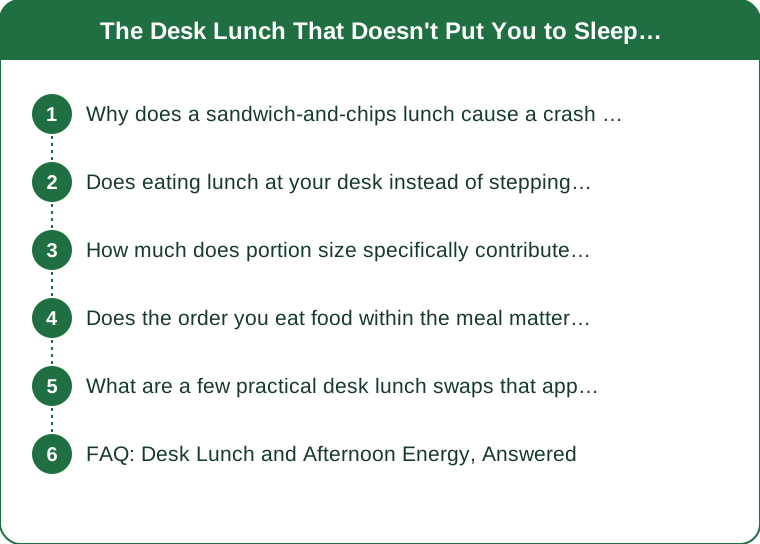
Why does a sandwich-and-chips lunch cause a crash but a similar-calorie bowl doesn’t?
It’s largely about composition, not calories — a lunch heavy in refined carbs (white bread, chips) with little protein or fiber spikes blood sugar quickly, triggering an insulin response that then drops blood sugar below baseline, producing the classic sleepy, foggy 2pm feeling; a bowl with protein, fiber, and complex carbs releases glucose more slowly and avoids that sharp drop.
Does eating lunch at your desk instead of stepping away actually make the crash worse?
There’s growing evidence that eating while working (versus a genuine break) is associated with poorer digestion and lower subjective satisfaction from the meal, which can indirectly contribute to reaching for more food or caffeine later — the crash itself is mostly about meal composition, but a rushed desk lunch compounds the problem.
How much does portion size specifically contribute to the afternoon slump?
A very large lunch redirects a larger share of blood flow to digestion, which can independently contribute to post-meal sleepiness regardless of composition — a moderate portion with the same protein-and-fiber-forward composition tends to produce less of a digestive drag than a very large version of an otherwise good meal.

Does the order you eat food within the meal matter, or just what’s in it?
Some research on meal sequencing suggests eating vegetables and protein before refined carbs within the same meal can blunt the resulting blood sugar spike compared to eating them in reverse order — a modest effect, but a free adjustment that requires no change to what’s actually packed for lunch.
What are a few practical desk lunch swaps that apply this without a full overhaul?
Swapping white bread for whole grain, adding a protein source (chicken, beans, eggs) to a carb-heavy dish, and adding a vegetable or fruit for fiber are the three highest-impact, lowest-effort changes — none require cooking differently, just adjusting proportions within a familiar meal.
FAQ: Desk Lunch and Afternoon Energy, Answered
Is caffeine after lunch a reasonable fix for the crash instead of changing what I eat?
Caffeine can mask the crash temporarily but doesn’t address the underlying blood sugar swing, and often leads to a second crash later plus potential sleep disruption if timed too late in the day.
Does drinking water with lunch help with the afternoon slump?
Mild dehydration independently contributes to fatigue and reduced concentration, so adequate water with and after lunch is a genuinely useful addition on top of meal composition changes, not a replacement for them.
How quickly should I expect to notice a difference after changing my desk lunch composition?
Many people notice a difference in afternoon energy within the same day of a composition change, though it can take a week or two of consistency to reliably confirm the pattern versus a one-off good day.
TL;DR:
- The afternoon crash is mostly about meal composition, not calories — refined carbs without protein or fiber spike and then drop blood sugar
- A rushed desk lunch compounds but doesn’t cause the core issue
- Large portions add a digestive drag on top of composition effects
- Adding protein, fiber, and water are the highest-impact, lowest-effort desk lunch swaps
The same sandwich every day and a wildly different afternoon isn’t random — it’s usually what’s (or isn’t) next to the bread.
Keep Reading
This article is for general informational purposes only and is not medical advice. Always consult a qualified health professional for guidance specific to you.