Taking the Lunch Break You're Owed: The Case Against Desk-Eating
The desk lunch — eaten one-handed over the keyboard, tasting of email — has quietly become the norm, and the research on it is unflattering: worse afternoons, worse digestion, zero recovery. The case for the actual break, and the blueprint for taking one in a culture that forgot how.

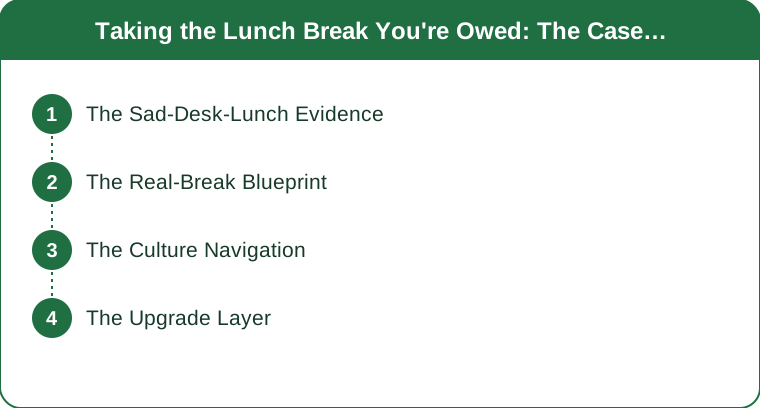
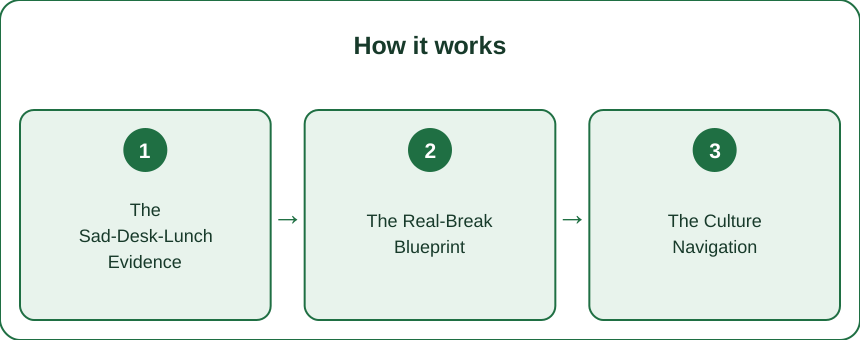
The Sad-Desk-Lunch Evidence
What eating-while-working costs: the recovery loss (lunch is the workday’s only built-in recovery block — the research on detachment breaks is consistent: the brain that briefly LEAVES work performs better after; the desk lunch spends the break without taking it), the eating-attention effect (distracted eating measurably increases intake and decreases satisfaction — the keyboard lunch that leaves you snacky at three has a mechanism), the afternoon dividend (workers taking real breaks report better afternoon focus and lower end-of-day exhaustion — the break isn’t stolen from productivity; it funds it), and the movement opportunity cost (the lunch hour is the workday’s best movement slot — spent motionless at the same desk, twice-billed).
The Real-Break Blueprint
The lunch that restores: the location change minimum (anywhere-but-the-desk — the break room, the bench outside, the car if that’s the privacy available; the detachment needs geography), the twenty-minute version (eat for ten attentively, walk for ten — the minimum effective break; the full hour is luxury, twenty minutes is non-negotiable), the attention rule (the phone-scroll lunch is the desk lunch with better scenery — one screen-free course is the actual detachment; the podcast walk is the legal compromise), and the walk-after pattern (the post-meal ten minutes doing its blood-sugar work — the evening-walk science at noon; the afternoon slump partly prevented before it forms).

The Culture Navigation
Taking breaks in break-hostile offices: the calendar defense (the lunch block booked as a meeting — the visible slot that colleagues schedule around; the boundary that settings enforce), the social-proof strategy (the lunch-walk invitation recruits allies — two people taking breaks is a norm forming; the walking-group logic at office scale), the manager conversation if needed (the framing that works: the break as performance maintenance — ‘I focus better afternoons when I take a real lunch’ is a productivity statement, not a confession), and the desk-lunch amnesty (some days genuinely are sandwiches-over-keyboards — the goal is the pattern, not purity; three real breaks a week beats zero).
The Upgrade Layer
Making the break worth wanting: the lunch worth pausing for (the batch-cooked real food beats the sad drawer crackers — the budget-batch system feeds the habit; a lunch you anticipate is a break you take), the micro-adventure tier (the twice-weekly somewhere-new lunch — the park two blocks further, the bench by the water; novelty makes twenty minutes feel like forty), the social option (the standing lunch date with the work friend — connection is recovery too), and the seasonal argument (the outdoor lunch season is finite — the summer bench and the autumn light are calendar-limited offers; the desk will still be there in February). The break was in the contract all along — the blueprint just takes delivery.
Leave the desk, eat then walk, book the block, pattern over purity. The lunch break is recovery you’re owed — twenty minutes, elsewhere, most days.
Keep Reading
This article is for general informational purposes only and is not medical advice. Always consult a qualified health professional for guidance specific to you.