You're Not Eating Lunch at Your Desk Because You're Too Busy — Here's the Actual Reason
‘I’m too busy’ is the automatic explanation almost everyone gives for eating lunch at their desk, but for a lot of people, a genuinely honest look at the day reveals that the actual barrier isn’t a true lack of available minutes — it’s something else entirely that ‘too busy’ is standing in for. Here is why the stated reason often isn’t the real driver, the actual psychological and workplace factors more commonly behind it, and how to address the real barrier instead of the stated one.

Why the ‘No Time’ Explanation Often Isn’t the Real Driver
The gap between stated and actual reason: the the-actual-time-required-to-eat-lunch-away-from-a-desk-is-genuinely-small (the physically relocating to eat lunch elsewhere typically costing only a few minutes of actual additional time, far less than the psychological weight the ‘too busy’ framing suggests — the the-real-time-cost-is-almost-always-smaller-than-the-stated-excuse-implies), the the-guilt-about-stepping-away-often-masquerades-as-a-time-constraint (the underlying anxiety about being perceived as less dedicated or productive getting reframed internally as a practical time limitation rather than acknowledged as guilt directly — the guilt-is-easier-to-express-as-im-too-busy-than-as-i-feel-guilty-stepping-away), the the-workplace-culture-signals-often-implicitly-discourage-stepping-away-from-desk-eating-without-saying-so-directly (the observing coworkers or leadership eating at their desks creating an unspoken norm that then gets internalized as a personal time problem rather than recognized as a cultural pressure — the an-unspoken-cultural-norm-can-feel-like-a-personal-time-limitation), the the-habit-and-inertia-play-a-larger-role-than-actual-daily-time-availability (the desk-lunch simply becoming the automatic default pattern that doesn’t get questioned day to day, regardless of whether that specific day is actually unusually busy — the the-habit-runs-on-autopilot-independent-of-whether-todays-workload-actually-justifies-it), the the-a-lack-of-an-appealing-alternative-space-or-plan-gets-mistaken-for-a-time-problem (the absence of a pleasant place to eat or a habit of bringing food from the desklunch-upgrade-guide logic sometimes getting misattributed to time scarcity rather than identified as a planning or environment gap — the missing-an-easy-alternative-plan-can-look-like-a-time-problem-from-the-inside), and the reframe (the ‘too busy’ framing as frequently standing in for guilt, unspoken workplace norms, pure habit, or a missing alternative plan — worth examining honestly rather than accepted at face value, since the real barrier usually isn’t actually about available minutes)).

The Actual Psychological and Workplace Factors Behind It
What’s really going on for many people: the the-visibility-and-perceived-productivity-signaling (the staying visibly at a desk functioning as an implicit signal of being busy and present, which some workplace cultures reward whether or not it’s ever stated as an expectation — the visible-presence-at-a-desk-can-function-as-an-unofficial-productivity-signal), the the-difficulty-mentally-transitioning-away-from-work-mode-even-briefly (the genuine difficulty some people have disengaging attention from work tasks even for a short lunch break, independent of actual time availability from the lunch-break-actually-taken-guide logic — the the-barrier-is-sometimes-attentional-and-psychological-not-logistical), the the-social-anxiety-or-lack-of-an-established-lunch-social-group (the absence of a comfortable person or group to eat with making a desk lunch feel like the more comfortable default over an available but socially uncertain alternative — the social-discomfort-can-be-a-real-and-unstated-factor-behind-the-choice), the the-a-workplace-lacking-an-appealing-break-space-reduces-the-motivation-to-leave (the physical environment itself — no pleasant break room, an unpleasant cafeteria — reducing the appeal of leaving a desk even when time technically allows it — the a-genuinely-unappealing-alternative-space-lowers-motivation-to-use-available-time-away), the the-fear-of-missing-something-time-sensitive-while-away (the specific anxiety about missing an urgent message or meeting during a short break, distinct from a general sense of overall busyness — the a-specific-fear-of-missing-something-is-different-from-and-more-precise-than-general-busyness), and the frame (the real factors as visibility signaling, difficulty mentally disengaging, social discomfort around eating with others, an unappealing physical alternative space, and a specific fear of missing something time-sensitive — a more accurate and more solvable set of barriers than a blanket time shortage).
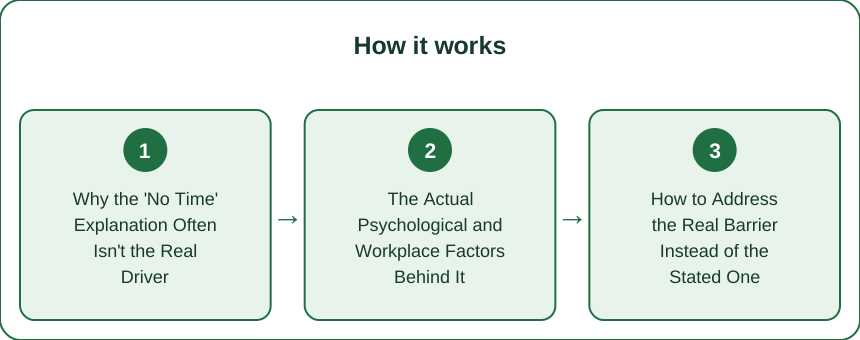
How to Address the Real Barrier Instead of the Stated One
The targeted fixes: the if-the-real-issue-is-guilt-or-visibility-address-it-directly-with-a-manager-or-team-norm (the having a direct conversation about break expectations, or simply modeling stepping away consistently, addressing the actual signaling concern rather than continuing to work around it silently — the addressing-the-signaling-concern-directly-solves-more-than-trying-to-find-more-time-ever-will), the the-if-the-issue-is-difficulty-disengaging-build-a-short-transition-ritual (the using a brief specific ritual — closing the laptop, a two-minute walk — to help mentally shift out of work mode before eating, addressing the attentional barrier directly — the a-transition-ritual-solves-an-attentional-problem-that-more-available-time-alone-wouldnt-fix), the the-if-the-issue-is-social-discomfort-start-small-with-one-low-pressure-lunch-companion (the identifying even one coworker for an occasional low-key lunch rather than needing an established full group before trying it — the a-single-low-pressure-companion-is-enough-to-start-addressing-the-social-barrier), the the-if-the-issue-is-an-unappealing-space-find-or-create-a-better-alternative (the identifying any nearby appealing space — outdoors, a quiet corner — even if it’s not a dedicated break room, addressing the environment barrier directly — the improving-the-actual-physical-alternative-addresses-the-real-barrier-more-than-trying-to-find-more-time-would), the the-if-the-issue-is-fear-of-missing-something-set-a-specific-brief-availability-window-instead (the establishing a short, clearly communicated availability check-in point during lunch rather than assuming full continuous availability is actually required — the a-specific-brief-check-in-plan-addresses-the-fear-more-precisely-than-just-staying-fully-tethered-the-whole-time), and the frame (the targeted fixes as addressing guilt or visibility directly, building a disengagement ritual for attentional difficulty, starting small on the social barrier, improving the actual physical alternative space, and setting a specific brief availability window for the missing-something fear — solving the real, specific barrier instead of the generic time excuse that was standing in for it).
‘I’m too busy’ is rarely the actual barrier behind eating lunch at a desk, since physically relocating to eat elsewhere typically costs only a few real minutes — the honest reasons are usually guilt about being perceived as less dedicated, an unspoken workplace norm around visible desk presence, difficulty mentally disengaging from work mode even briefly, social discomfort around finding someone to eat with, an unappealing physical alternative space, or a specific fear of missing something time-sensitive. Address whichever real barrier actually applies rather than continuing to search for more time that was never really the issue: talk directly about break expectations if visibility or guilt is the driver, build a brief transition ritual if disengaging attention is the real difficulty, start with just one low-pressure lunch companion if social discomfort is behind it, find or create a genuinely better physical space if the environment is unappealing, and set a specific brief availability check-in window if the real fear is missing something urgent while away.
Keep Reading
This article is for general informational purposes only and is not medical advice. Always consult a qualified health professional for guidance specific to you.